
Cristóbal de Morales - Lamentations - CD
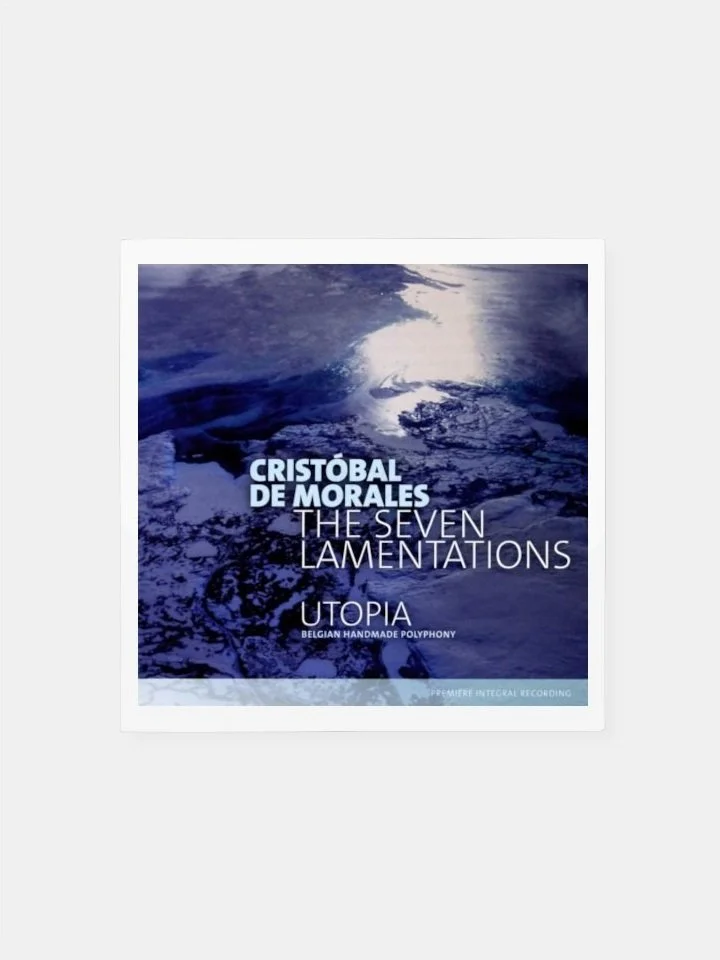
Cristóbal de Morales - Lamentations - CD
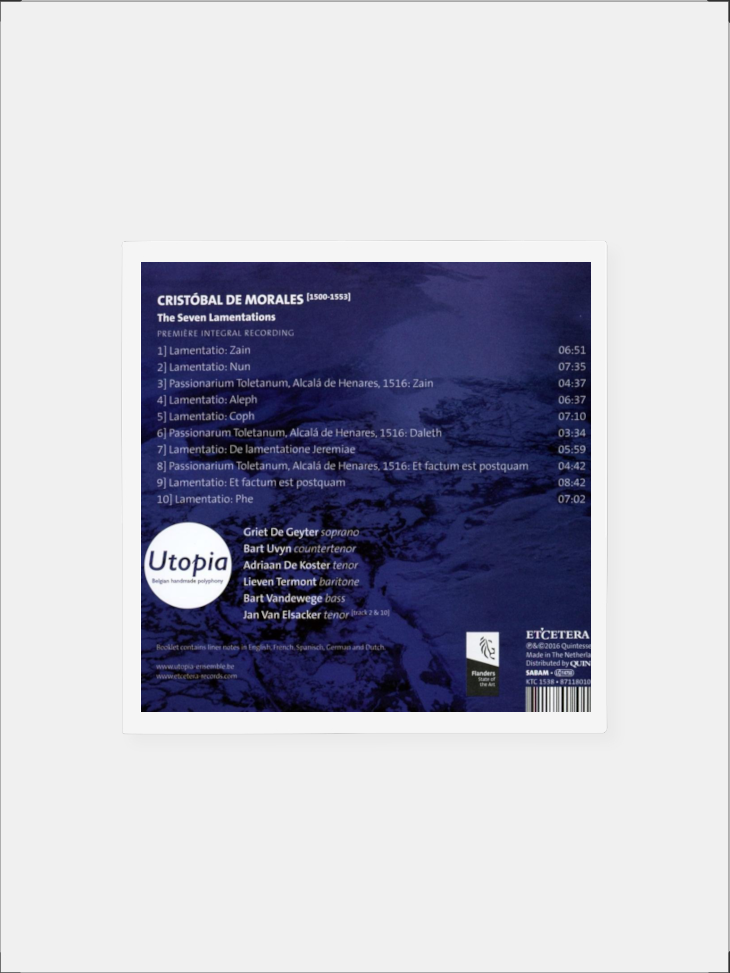
The Seven Lamentations by Cristóbal De Morales, Luz de Espana en la Musica (Juan Bermudo, 1555).
The Lamentations from the Old Testament date back to the 6th century BC, to the sack of Jerusalem by Nebuchadnezzar II, King of Babylon — on whose character Verdi was to base his opera Nabucco. The Lamentations have generally although possibly erroneously been attributed to the prophet Jeremiah. Their deeply expressive character has ensured that they have been set to music by many different composers, ranging in style from various monodic Gregorian settings to fully polyphonic compositions. These deeply moving works were performed each year during the Triduum sacrum, the three-day period of Maundy Thursday, Good Friday and Easter Saturday. Three lectiones were sung during Matins on each of these days, making nine in total. The verses of each lamentation generally begin with a lengthy melisma of mourning set to one letter of the 22-character Hebrew alphabet, creating a type of alphabetic acrostic. These lamentations consist of a limited selections of verses from five lengthy chapters, each of which contained either 22 or 66 verses. Each lamentation ends with the moving refrain Jerusalem, Jerusalem convertere ad Dominum Deum tuum (Jerusalem, turn again to the Lord your God), although these words were not written neither by Jeremiah nor any of his contemporaries. The city of Jerusalem is addressed as a lonely widow, one who has lost everything, her husband and children included.